


Among the most celebrated monuments on Earth, the Taj Mahal occupies a position unlike any other. While it stands alongside the world’s most iconic structures as part of the Seven Wonders, its identity, purpose, and emotional impact differ fundamentally from the rest. Most wonders were created to display power, religious dominance, engineering triumph, or imperial ambition. The Taj Mahal, however, was built as an expression of personal devotion, eternal remembrance, and artistic perfection.
This distinction is the reason travelers, historians, architects, and cultural scholars often regard the Taj Mahal as the most emotionally resonant monument ever created. When compared carefully with other Seven Wonders, its uniqueness becomes even more evident, not just in appearance but in meaning, construction philosophy, and enduring relevance.
One of the most defining differences between the Taj Mahal and other Seven Wonders lies in why it was built. Most global wonders were constructed to demonstrate authority, conquest, or religious supremacy. In contrast, the Taj Mahal was created as a mausoleum dedicated to love and loss.
This emotional origin gives the Taj Mahal a human dimension rarely seen in monumental architecture. It was not meant to intimidate, defend, or dominate territory. Instead, it was designed to preserve memory, emotion, and spiritual symbolism. Visitors often describe a sense of calm, reflection, and emotional connection that goes beyond visual admiration.
This purpose-driven design is a major reason why the Taj Mahal stands unique among the Seven Wonders of the World.
Get expert insights, travel tips & customized itineraries to include Taj Mahal and other world wonders in your trip plan.
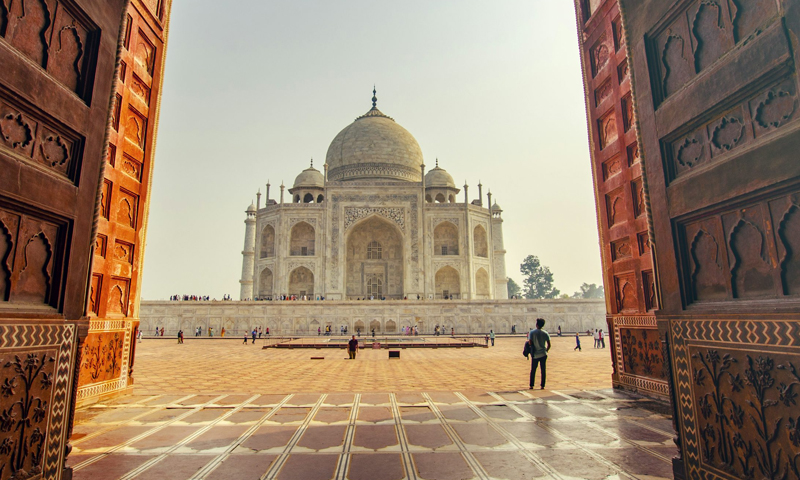
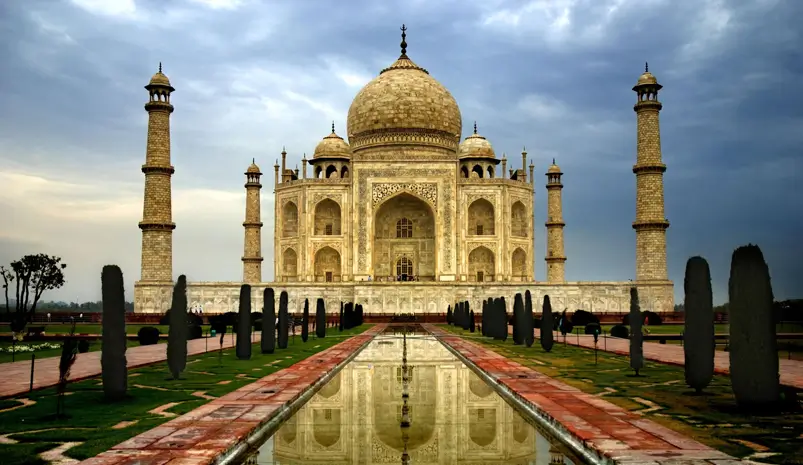
Many Seven Wonders emphasize scale and mass. Large stone blocks, towering heights, or expansive footprints define their physical presence. The Taj Mahal, while grand, prioritizes balance, symmetry, and proportion over sheer size.
Its architecture follows strict geometric principles that create harmony rather than dominance. Every element is measured to complement the whole, resulting in a structure that feels complete from every angle. Unlike monuments built to overwhelm the viewer, the Taj Mahal invites contemplation.
This refined architectural approach distinguishes it from structures that rely primarily on monumentality.
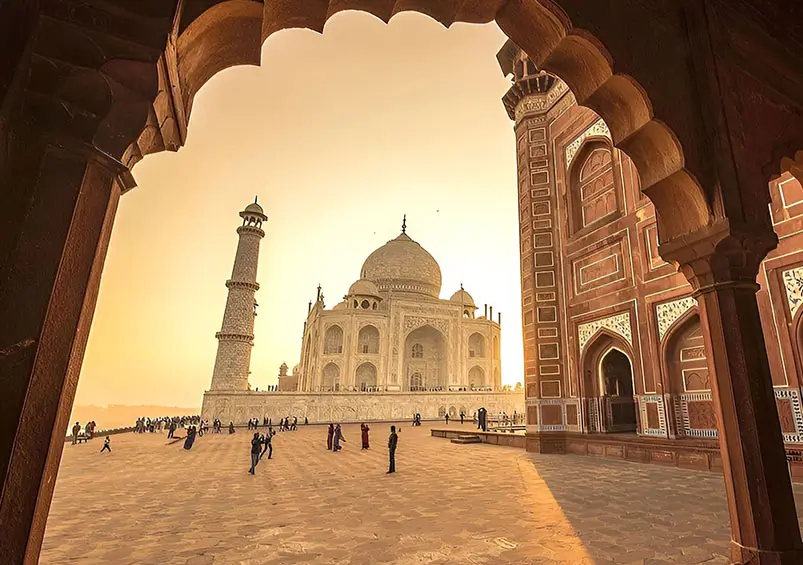
The Taj Mahal’s extensive use of white marble sets it apart visually and symbolically. Marble was chosen not only for durability but also for its reflective qualities and spiritual connotations. Light interacts with the surface throughout the day, giving the monument a living presence.
Other wonders primarily rely on stone, brick, or concrete materials chosen for strength and availability. The Taj Mahal’s material selection reflects an emphasis on beauty, purity, and transcendence rather than military or functional needs.
The intricate stone inlay work, delicate floral motifs, and calligraphic inscriptions elevate the structure from architectural achievement to artistic masterpiece.
Many wonders inspire awe through their size or technical complexity. The Taj Mahal inspires something deeper — emotional resonance. Visitors often describe feelings of stillness, reflection, and emotional engagement rather than excitement or dominance.
This emotional impact stems from the monument’s origin story, artistic detail, and serene environment. It speaks to universal human emotions, making it relatable across cultures and generations.
This emotional universality gives the Taj Mahal an advantage that no other wonder fully replicates.
The Taj Mahal has become a global symbol of love, devotion, and artistic excellence. It transcends national identity and is recognized worldwide as a representation of India’s cultural heritage.
While other wonders are often associated with specific civilizations or historical periods, the Taj Mahal’s symbolism is timeless. It is not tied to conquest or religious conversion but to memory and continuity.
This universal symbolism contributes to its status as one of the most visited and photographed monuments globally.
Explore Taj Mahal alongside Seven Wonders with a private guide, flexible routes & comfy travel arrangements.
The Taj Mahal’s construction demonstrates extraordinary engineering precision achieved without modern tools. The foundation system, structural balance, and optical corrections reveal advanced knowledge of physics, geometry, and material science.
While other wonders required massive labor forces and brute strength, the Taj Mahal reflects intellectual refinement. Every structural decision balances aesthetic appeal with longevity.
This combination of beauty and technical foresight places it in a unique category among global monuments.
Unlike wonders that dominate their surroundings, the Taj Mahal is designed to exist in harmony with its environment. Gardens, water channels, pathways, and reflective pools form an integrated experience that enhances the monument’s presence.
The surrounding space is as important as the structure itself. This spatial planning creates a sense of journey and progression, guiding visitors emotionally and visually.
This thoughtful integration of architecture and landscape is rare among monumental structures.
The Taj Mahal incorporates spiritual symbolism without imposing religious authority. Quranic inscriptions, garden symbolism, and spatial alignment evoke concepts of paradise and eternity without exclusion.
Other wonders often represent religious or political dominance tied to specific belief systems. The Taj Mahal, by contrast, communicates spirituality through abstraction and universal themes.
This inclusive approach allows visitors from diverse backgrounds to connect with the monument on their own terms.
The Taj Mahal remains actively preserved and studied, with ongoing conservation efforts ensuring its longevity. It continues to inspire contemporary architecture, art, and cultural discourse.
Unlike wonders that exist primarily as archaeological remnants, the Taj Mahal remains a living monument — visited, studied, and admired daily.
Its continued relevance underscores why it stands apart from other wonders not only historically but also in the present day.
The Taj Mahal’s uniqueness lies in its ability to combine art, emotion, engineering, and symbolism into a single harmonious expression. It does not rely on spectacle alone. Instead, it communicates meaning through subtlety, balance, and intention.
This multidimensional identity ensures that each visitor experiences the monument differently, yet meaningfully. Few structures achieve such universal resonance.
Post By :- Admin On | 26 Dec 2025
Its emotional purpose, artistic refinement, and symbolic depth distinguish it from others.
No, it was built as a mausoleum dedicated to Mumtaz Mahal.
It is younger than many ancient wonders but remains better preserved.
No, it reflects spiritual symbolism without imposing authority.
Marble enhances beauty, symbolism, and light reflection.
Yes, especially in foundation design and structural balance.
It is widely regarded as the most artistically refined monument.
Yes, it continues to inspire architecture and cultural thought.
Yes, though its purpose and expression are fundamentally different.
Its origin story and serene design evoke universal emotions.