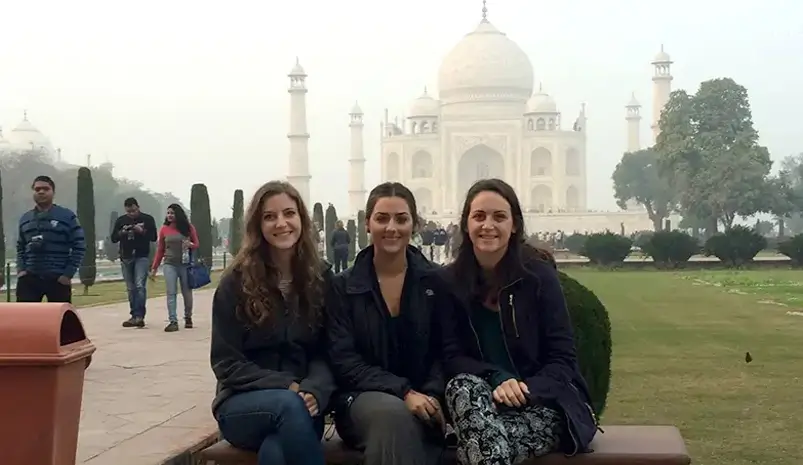



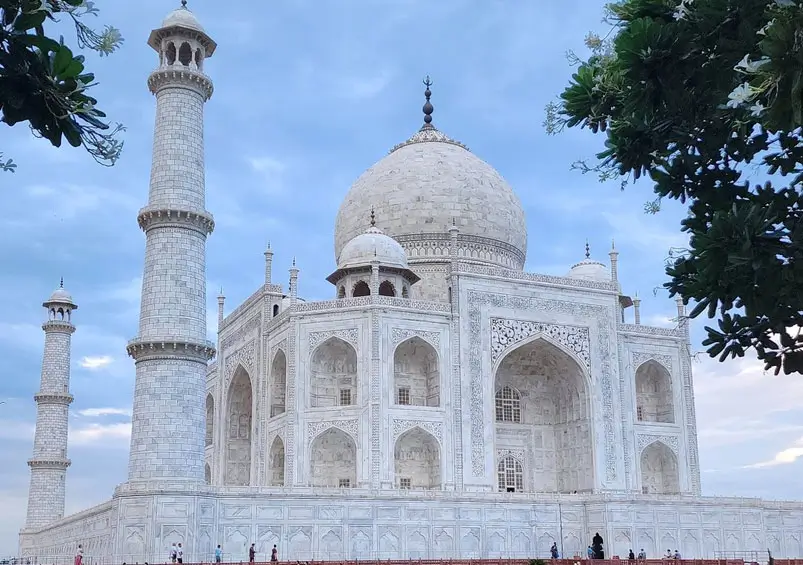
The Taj Mahal stands as one of the most recognized monuments on Earth, yet its deeper story is far richer than the images commonly seen in photographs. Beyond its white marble beauty lies a layered narrative of Mughal ambition, artistic mastery, emotional symbolism, and advanced engineering. Understanding the history and architecture of the Taj Mahal allows visitors to move beyond surface admiration and connect with the monument on an intellectual and emotional level.
For foreign travelers, the Taj Mahal is often the first direct encounter with Mughal heritage. Its scale, symmetry, and atmosphere immediately distinguish it from other world monuments. However, the true essence of the Taj Mahal unfolds only when its historical background, architectural logic, and hidden details are understood together as one unified vision.
The Taj Mahal was commissioned by Mughal Emperor Shah Jahan in memory of his wife Mumtaz Mahal. Their relationship was deeply emotional, and her death left a profound impact on the emperor. Rather than creating a conventional tomb, Shah Jahan envisioned a monument that symbolized eternal love, spiritual purity, and paradise on earth.
The construction of the Taj Mahal took many years and involved artisans, architects, and craftsmen from different regions. The project reflected the wealth, stability, and artistic ambition of the Mughal Empire at its peak. It was not merely an act of mourning but a declaration of cultural refinement and imperial vision.
This historical context explains why the Taj Mahal feels different from monuments built for conquest or defense. It was created for remembrance and eternity.
Learn about Mughal architecture, construction techniques, precious stones, artisans, and the love story behind the Taj Mahal with our expert guides and historians.
Mughal architecture emphasized balance, harmony, and symbolism. The Taj Mahal represents the highest expression of this philosophy. Every structural choice was guided by spiritual and aesthetic considerations rather than practicality alone.
The Mughal concept of paradise played a central role in the design. Gardens, water channels, and symmetrical layouts were intended to reflect descriptions of paradise found in Islamic tradition. The Taj Mahal was designed not only as a resting place but as a symbolic gateway between earthly life and eternal peace.
This vision transformed the monument into a spiritual landscape rather than a simple building.
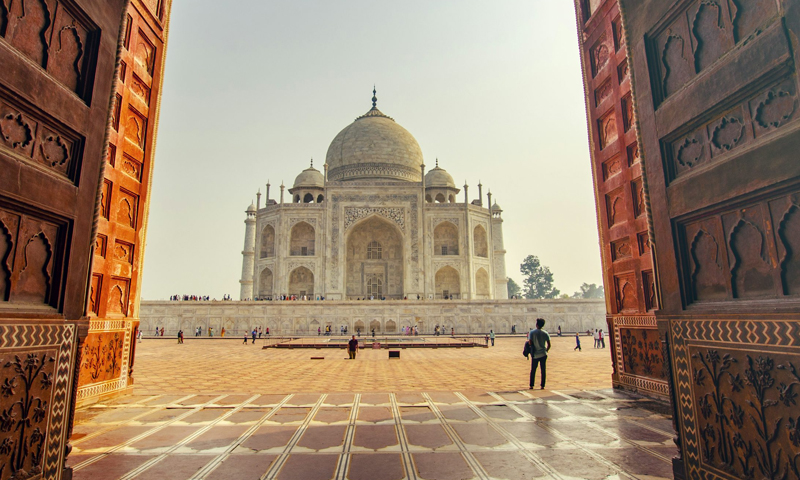
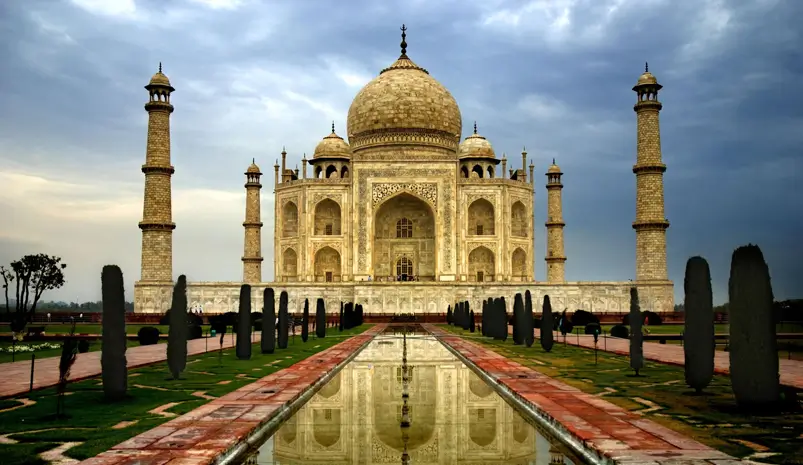
The Taj Mahal complex follows a strict axial layout that creates visual harmony from the moment visitors enter. The long central pathway, flanked by gardens and water channels, leads the eye directly to the mausoleum.
This spatial planning was designed to create anticipation and emotional progression. As visitors move closer, the monument gradually reveals its scale and detail. The symmetrical arrangement of buildings reinforces a sense of balance and calm.
Such precise spatial organization reflects advanced understanding of geometry and human perception.
The choice of white marble defines the Taj Mahal’s visual identity. Marble was sourced from distant regions and selected for its durability, luminosity, and symbolic purity. Unlike sandstone structures common in earlier Mughal architecture, the extensive use of marble marked a shift toward refinement.
The marble surface interacts with natural light, changing color throughout the day. This quality enhances the monument’s emotional presence and reinforces its association with purity and eternity.
Material selection was not only aesthetic but philosophical.
One of the most admired features of the Taj Mahal is its intricate pietra dura inlay work. Semi-precious stones were embedded into marble surfaces to create floral patterns, vines, and geometric designs.
These decorations required extraordinary precision. Craftsmen cut stones by hand and fitted them seamlessly into marble grooves. The level of detail reflects artistic discipline and patience rarely seen on such a scale.
The decorative work transforms stone into visual poetry, adding softness to architectural strength.
The Taj Mahal is adorned with calligraphic inscriptions drawn from Islamic texts. These inscriptions are not merely decorative but deeply symbolic, emphasizing themes of judgment, mercy, and paradise.
A remarkable feature is the optical correction used in calligraphy. Letters grow slightly larger as they rise higher on the structure, ensuring uniform appearance when viewed from below. This subtle adjustment demonstrates exceptional planning.
Calligraphy at the Taj Mahal blends spiritual meaning with visual harmony.
Discover the unique Persian–Indian architectural blend, symmetry, white marble work, Quranic inscriptions, and engineering secrets of the Taj Mahal.
Despite its age, the Taj Mahal remains structurally stable due to innovative engineering techniques. The foundation system was designed to accommodate the riverbank environment, ensuring long-term stability.
Minarets surrounding the mausoleum are intentionally tilted outward to protect the central structure during seismic activity. This foresight reflects deep understanding of structural dynamics.
Engineering decisions were integrated seamlessly into the monument’s aesthetic design.
The gardens of the Taj Mahal are integral to its meaning. Designed as a charbagh, the garden layout divides space into four sections representing the Islamic vision of paradise.
Water channels symbolize life and reflection, enhancing visual symmetry. The placement of the mausoleum at the end of the garden rather than the center breaks traditional design rules, emphasizing spiritual progression.
Landscape design reinforces philosophical themes rather than serving decorative purposes alone.
The Taj Mahal complex includes a mosque and a matching structure built for symmetry. The mosque serves religious functions, while its twin structure maintains visual balance.
These buildings frame the mausoleum and complete the composition. Their placement reflects Mughal emphasis on symmetry even when functional requirements differ.
This balance contributes to the monument’s calm and harmonious atmosphere.
Visitors see symbolic tombs inside the mausoleum, while the actual graves lie in a chamber below. This separation reflects Islamic burial traditions emphasizing simplicity in death.
The inner chamber’s acoustics and lighting create a solemn atmosphere, reinforcing spiritual reflection. Restrictions on photography preserve sanctity and silence.
The contrast between outer grandeur and inner simplicity carries deep meaning.
The Taj Mahal’s design includes subtle imperfections introduced intentionally to emphasize divine perfection. Certain elements were altered to prevent the structure from appearing mechanically perfect.
Historical records suggest the complex was once part of a larger urban landscape with markets and gardens. Over time, changes reshaped its surroundings.
These details reveal the monument as a living piece of history rather than a static object.
The Taj Mahal has influenced architecture, art, and cultural imagination worldwide. It is recognized as a symbol of love, craftsmanship, and spiritual aspiration.
Its image appears in literature, cinema, and global iconography. Despite centuries of change, its relevance remains intact.
Cultural impact extends beyond borders and generations.
Conservation efforts aim to protect the Taj Mahal from environmental and structural threats. Preservation ensures that future generations can experience its beauty and meaning.
The monument remains an active site of study, tourism, and inspiration. Its story continues to evolve through interpretation and scholarship.
Preservation maintains continuity between past and present.
Post By :- Admin On | 05 Jan 2026
It was commissioned by Mughal Emperor Shah Jahan.
Marble symbolizes purity and reflects light beautifully.
The project spanned many years with extensive craftsmanship.
Yes, for optical correction.
For structural safety during earthquakes.
Almost, except for Shah Jahan’s tomb placement.
They represent paradise.
No, the real graves are below.
To preserve sanctity and atmosphere.
Its design integrates symbolism, balance, and emotion.